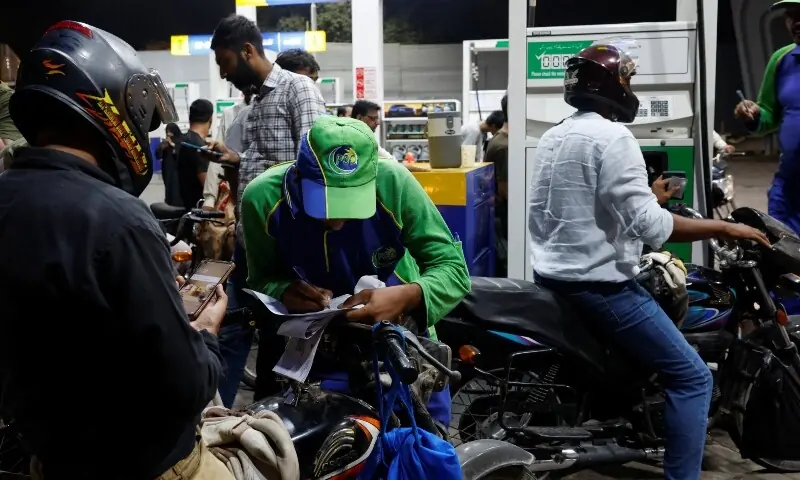
According to a report by Dawn, the Pakistani government has increased domestic fuel prices, raising petrol by Rs2.10 per litre and high-speed diesel (HSD) by Re0.30 per litre. Following this adjustment, petrol retails at Rs392.76 per litre, while HSD costs Rs399.64 per litre. A notification from the Petroleum Division states that the updated rates are effective from Saturday, October 3, through Monday, October 5. The government continues to levy taxes and duties of Rs114 per litre on petrol and Rs100 per litre on HSD.
What happened
Dawn reported that fuel prices initially surged following the outbreak of the US-Iran war on February 28. Diesel prices climbed from Rs281 per litre to a peak of Rs520.35 on April 3, while petrol increased from Rs266 per litre in early March to a peak of Rs458.41 on April 3. To cope with international volatility, Petroleum Minister Ali Pervaiz Malik announced on July 17 that the Oil and Gas Regulatory Authority (Ogra) would set fuel prices on a daily basis instead of weekly.
Key facts
- In response to high global oil prices and ongoing Middle East conflicts, the government reintroduced conservation measures, mandating that markets close by 9pm and cutting official vehicle fuel allocations by 50 percent for three months.
- On September 13, Prime Minister Shehbaz Sharif introduced a relief program for owners of motorcycles, rickshaws, and cars with engines up to 800cc.
- On September 29, Deputy Prime Minister and Foreign Minister Ishaq Dar stated that the relief program had recorded nearly 7.60 million registrations and 7.71 million token redemptions by its second week.
- The relief initiative involved joint efforts from the petroleum, IT, and information ministries, along with Ogra, the State Bank of Pakistan, and provincial governments.
Why it matters
According to Dawn, petrol price adjustments directly impact the middle and lower-middle classes, who rely heavily on two-wheelers, auto-rickshaws, and small automobiles. Meanwhile, changes in diesel prices affect the general public due to its extensive use in heavy transport, power generation, and commercial generators. Both fuels serve as primary revenue sources, generating monthly sales between 700,000 and 800,000 tonnes, compared to a monthly kerosene demand of 10,000 tonnes.
Source: Dawn - Home · Published October 02, 2026 · Image via Dawn - Home